All Categories
Featured


Managing Insurance for Diabetic Applicants
Table of Contents
Make a threat choice from the list above.
Mental Health Life InsuranceWhat will disqualify me from life insurance is one of the most searched concerns in the life insurance coverage market and the most commonly misconstrued. The property embedded in the question that there is a set list of conditions, medications, or circumstances that avoid protection is not how underwriting in fact works.
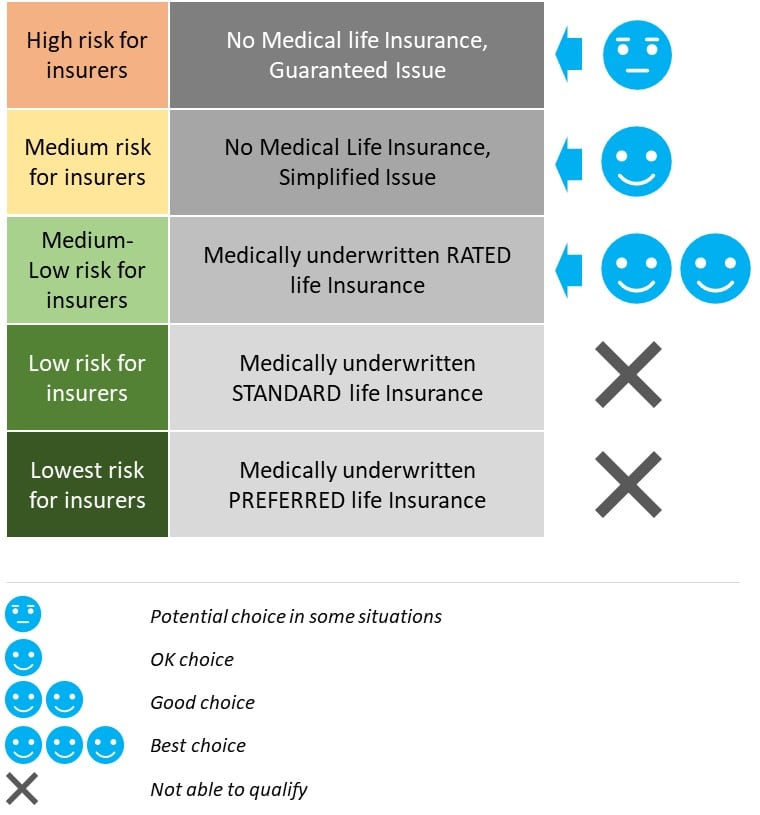
The overwhelming majority of circumstances that people refer to as "disqualifying" are actually rate-impacting, carrier-specific, product-specific, or documentation-dependent indicating the very same candidate who receives a decrease from one provider may get a basic or decently ranked offer from another, and the very same applicant who can not receive fully underwritten term life might receive a long-term design or simplified problem item that serves the very same household security objective at a manageable expense.
Compassionate Coverage for Post-Treatment Cancer Survivors
The most essential reframe for any candidate investigating what will disqualify them from life insurance is this: a decrease is one carrier's decision, at one moment, based upon one set of underwriting guidelines, used to one set of realities as that provider received them. It is not a universal verdict.
Mental Health Life Insurance
Inform us what's going on health history, medications, develop, occupation, visa status, or a prior decrease and we'll map the finest approval path available for your particular circumstance. The most beneficial structure for comprehending what will disqualify somebody from life insurance coverage is a spectrum instead of a list. Different elements sit at various points on this spectrum from real decline activates that correspond across essentially all providers to aspects that simply adjust the premium at the bulk of providers while keeping protection accessible.
Element Impact Level Common Result atStandard Carriers Path Forward Active terminal disease/ end-stage organ failure Real disqualifier Decrease at essentially all carriers for fully underwritten protection Guaranteed problem final expenditure might be accessible; graded benefit typically uses Active cancer in treatment True disqualifier throughout treatment Postpone at almost all carriers up until treatment ends and remission is documented Apply after remission disease-free intervals restore conventional protection access; plan the application timing thoroughly Extremely recent major heart event (last 312 months) Carrier-specific postponement Postpone pending stability window; most providers require defined period post-event File cardiac rehabilitation, follow-up care, and EF; reapply after stability duration at cardiac-experienced carriers Unrestrained diabetes with numerous complications Severe decrease or heavy score Decline or heavy table ranking depending on complication intensity and A1C pattern Professional providers for impaired risk; simplified problem as interim; improve control and reapply Well-controlled persistent condition (diabetes, hypertension, COPD) Rate-impacting not disqualifying Standard to table-rated at many carriers; preferred possible at beneficial carriers Carrier matching to the most favorable underwriting philosophy for the particular condition Steady mental health history (depression/anxiety, treated) Rate-impacting to very little Often basic to somewhat rated; long-lasting stability substantially improves result Document stability, treatment consistency, and absence of hospitalizations; carrier choice matters Prescription mismatch with application disclosure Process-driven preventable Hold-up, additional inquiry, prospective decrease or score if carrier analyzes as misstatement Accurate complete disclosure before application; context provided in broker letter; prescreen to recognize carrier most likely to see profile properly Elevated BMI/ build otherwise healthy Rate-impacting at most providers Table rating or build decline at rigorous carriers; basic possible at providers with more beneficial develop standards Provider choice specifically for construct standards; beneficial laboratories can balance out build issue at some providers High-risk occupation or avocation Carrier-specific rate or exclusion Flat additional additional charge or activity exclusion rider; straight-out decrease at some carriers Specialty providers for particular occupation/avocation profiles; exclusion riders might achieve coverage without activity-related additional charge Visa/ residency/ documentation gaps Carrier-specific Decline at providers without visa underwriting; approval at providers with clear visa documents structures Target providers with recognized H1B, TN, or other visa underwriting frameworks; documentation checklist is the crucial variable The table exposes the main insight: what will disqualify somebody from life insurance coverage at one carrier is often manageable at a various carrier, with different paperwork, or through a different product for most of circumstances.
Compassionate Coverage for Post-Treatment Cancer Survivors
Whatever else exists on a spectrum where provider matching, product selection, documents quality, and application timing produce meaningfully different outcomes. Our resource on am I too young for life insurance covers the age dimension of eligibility issues, which matters context for understanding why timing both of application and of life phase impacts results across many categories in this table.
The underwriting procedure is not an obstacle course developed to remove as lots of candidates as possible it is a risk rates system designed to identify whether a carrier can make a long-lasting promise (paying a death benefit when the insured dies) at a premium that shows the real actuarial threat of that pledge becoming due earlier than anticipated.

Latest Posts
Managing Insurance for Diabetic Applicants
The Benefits of Specialized Impaired Life Insurance
Exploring Advanced Options for Impaired Risk & Special Needs