All Categories
Featured
Top Benefits of Specialized Impaired Policy Models
Essential Insurance Solutions for Special Needs Trusts
Critical Travel Health Insurance for Chronic Conditions

Essential Insurance Solutions for Special Needs Trusts
Table of Contents
To the degree that income is distributed to the beneficiaries, the recipients, not the trust, go through tax on that income. Income distributed to an unique requirements beneficiary does not usually result in a big tax repercussion, because recipients usually have actually limited gross income. Often, the unique requirements beneficiary's earnings is below the limitation topic to income tax.
When the SNT retains trust earnings, nevertheless, unique tax guidelines apply that typically result in considerably higher earnings tax responsibilities. Under current law, the tax brackets for trusts and estates are compressed, which suggests that a trust reaches the highest earnings tax rate (39.6 percent in 2013) once it has $11,950 of income (in 2013).
Using the 2013 tax tables, a trust will go through earnings tax rates of 25 percent (the next tax bracket over 15 percent) on earnings over $2,450, while a single individual (for example, the SNT recipient) would reach this tax rate just if the beneficiary had earnings over $36,250.
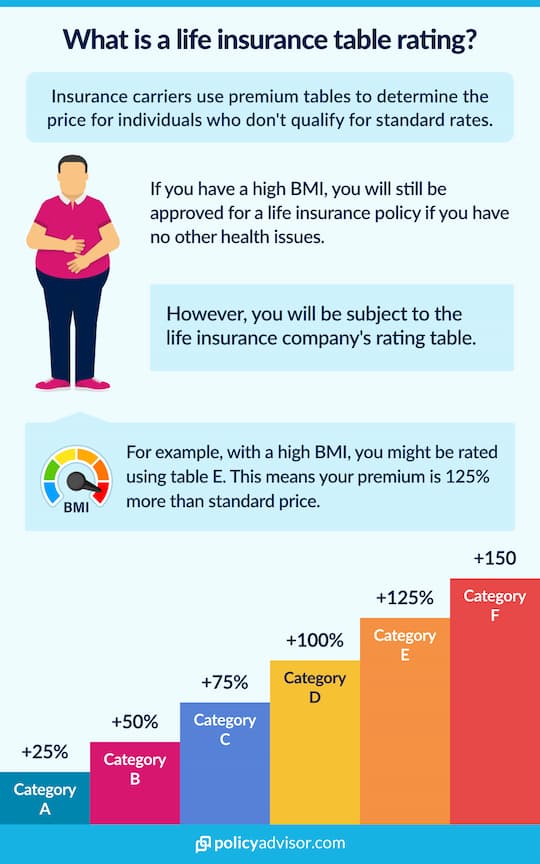
To make matters worse, SNTs with undistributed income in excess of $11,950 likewise will undergo the 3.8 percent financial investment income surtax enforced by the Client Protection and Affordable Care Act of 2010, increasing the overall tax rate paid on income over $11,950 to 43.6 percent. Clearly, these high tax rates impose pressure on trustees to make distributions, even when distributions may not be prudent provided the special situations of the special needs recipient.
Impaired Risk InsuranceTo fix the issue, the invested assets inside of the trust would need to be protected from existing earnings tax (by being tax-deferred or tax-exempt), while still being offered for the trustee to distribute to the special needs individual when required. Life insurance coverage may be a perfect financing automobile for SNTs, particularly due to the 2013 income tax increase and the imposition of the financial investment income surtax.
Comparing Current Policy Assessments for Impaired Conditions
Like the case with SNTs, the sponsors of executive delayed compensation plans look for to avoid current earnings tax on accumulations while retaining access to the hidden investment assets so that circulations can be made as defined in the strategy. As a funding automobile, life insurance offers tax-deferred development (or tax-free growth, if the policy is in force at the death of the insured), yet permits the owner either to withdraw funds approximately the quantity of the basis in the policy, or obtain from the cash value without income tax repercussions.
When SNTs are created as inter-vivos trusts, life insurance can be acquired on the life of the grantor, the grantor's partner, or as a joint life policy on the couple. During the grantor's life, much of the recipient's monetary needs can be paid for straight by the grantor, thus allowing the policy cash worth inside the trust to build up while still being offered for usage if needed.
If the special needs specific is insurable, an alternative method is a life insurance policy purchased on the life of the recipient. This approach supplies tax deferment on the underlying financial investments while allowing access to those investments for distribution when needed and replacing the wealth consumed by the special needs recipient with a tax-free life insurance survivor benefit for the remainder beneficiaries of the SNT.
Although situations will vary, use of a maximum-funded, low-death-benefit variable universal life insurance coverage policy usually will be appropriate, specifically when the predicted timespan and the grantor's financial threat tolerance are consistent with equity-based returns. Despite the kind of policy, life insurance funding permits SNT grantors to maximize the benefits offered to unique needs children by depriving the federal government of high income tax payments from the special needs trust.
Advanced Funding Strategies for Special Needs Trusts
This problem of The Voice is written by Ken W. Shulman, Esq. who is a partner in the Boston, Massachusetts, office of Day Pitney LLP. Ken focuses his practice on estate planning and associated problems for households who have children with specials needs and on senior law. He has actually served as a board member for a number of human service agencies including the Greater Boston ARC and presently serves as a board member for the Asperger's Association of New England.
Impaired Risk InsuranceHe is a co-author of Managing an Unique Needs Trust, Individuals with Disabilities Press (2010 ). Ken frequently works as a trustee of special needs trusts at his customers' demand. Ken belongs to the Unique Needs Alliance, a nationwide, non-profit organization dedicated to assisting individuals with disabilities, their households, and the specialists who represent them.

Latest Posts

Finding Medical Safety for Global Trips Abroad
Top Benefits of Specialized Impaired Policy Models
Essential Insurance Solutions for Special Needs Trusts